
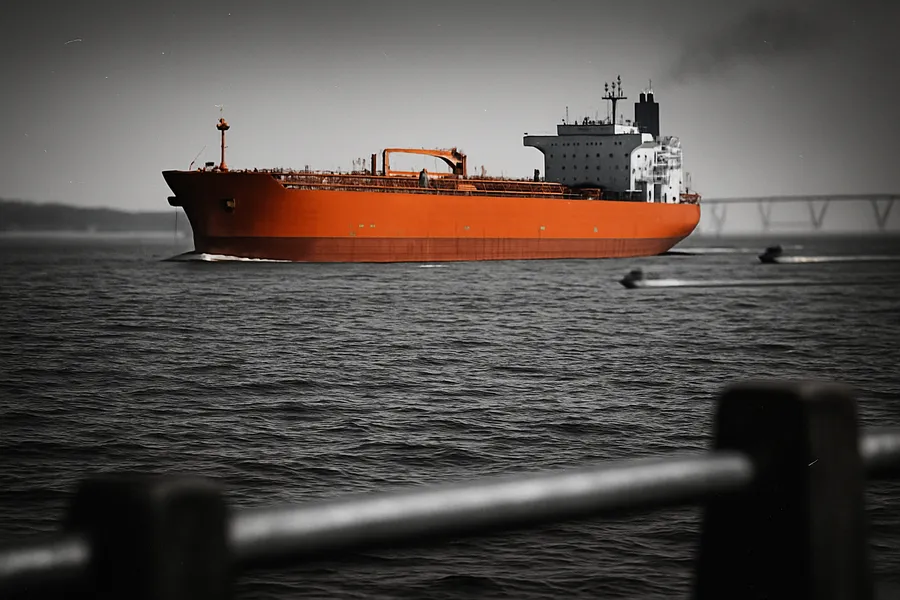
The Trump administration is considering a Jones Act waiver to allow foreign ships to transport oil between U.S. ports amid surging energy prices driven by Middle East conflicts.
The century-old shipping restriction typically limits domestic cargo transport to American-built, owned and crewed vessels, creating potential supply bottlenecks during energy crises.
Key Takeaways
- Jones Act waiver could ease domestic fuel shipping constraints
- Oil prices hit $119.50 per barrel amid Iran conflict
- Waiver would allow foreign tankers in U.S. coastal trade
Market Context and Energy Crisis
Oil prices briefly surged to $119.50 per barrel Monday, marking the highest level since summer 2022 following Russia’s Ukraine invasion 1. The Strait of Hormuz, carrying roughly 20% of global oil supply, faces disruption from escalating Iran-Israel tensions.
U.S. national average gasoline prices reached $3.60 per gallon Thursday, the highest since May 2024, while diesel hit $4.89 per gallon 1. These increases pose political risks for Trump and Republicans ahead of November midterm elections.
Jones Act Restrictions and Potential Relief
The Merchant Marine Act of 1920 requires domestic cargo shipments use vessels built, flagged and primarily crewed by Americans. This limits available tankers for moving fuel from Gulf Coast refineries to East and West Coast markets.
A temporary waiver would expand shipping capacity and potentially reduce transport costs. “On a daily basis, the waiver might slow price increases by around a nickel a gallon,” said Patrick De Haan, analyst with fuel price tracker GasBuddy 1.
Political and Economic Implications
White House press secretary Karoline Leavitt said the administration is “considering waiving the Jones Act for a limited period of time to ensure vital energy products and agricultural necessities are flowing freely to U.S. ports” 1. She added the action has not been finalized.
The American Farm Bureau Federation requested the waiver March 9, warning of fertilizer price spikes for farmers due to shipping disruptions. Previous waivers occurred only during major supply disruptions like hurricanes Harvey and Maria in 2017.
Industry and Congressional Response
Senator Mike Lee (R-Utah) supports broader action, posting on social media: “I introduced the Open America’s Waters Act last year to repeal the Jones Act, which raises the cost of energy and goods on consumers” 2. The current crisis provides momentum for permanent reform advocates.
Critics argue the Jones Act increases shipping costs even during normal operations, citing Puerto Rico’s inability to access U.S. liquefied natural gas due to lack of compliant tankers 2.
Broader Energy Response
The International Energy Agency announced a coordinated release of 400 million barrels from emergency reserves, with the U.S. contributing 172 million barrels. Trump is also reportedly considering invoking Defense Production Act powers to restart offshore California oil production.
Energy economists note that while strategic reserves provide temporary relief, sustained high prices depend on Middle East developments and shipping route security.
Not investment advice. For informational purposes only.
References
1Jarrett Renshaw (March 12, 2026). “Trump administration considers loosening US shipping rules to combat fuel price spike”. Reuters. Retrieved March 12, 2026.
2Joe Lancaster (March 10, 2026). “Trump May Waive the Jones Act for Oil Shipments. Let’s Repeal It Instead.”. Yahoo News. Retrieved March 12, 2026.
3Piyush Shukla (March 12, 2026). “What is the Jones Act and why is the Trump administration considering a shipping waiver now”. Economic Times. Retrieved March 12, 2026.
4Jennifer A. Dlouhy and Nathan Risser (March 11, 2026). “Trump to Invoke Emergency Law for Offshore Oil Producer Sable”. Bloomberg. Retrieved March 12, 2026.