
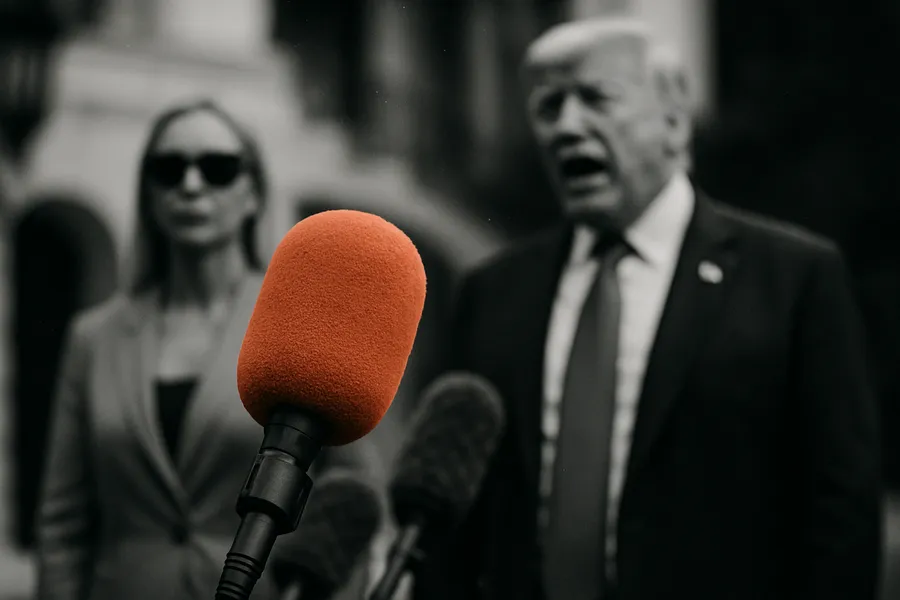
President Trump said Wednesday he’s “not worried” about Iran-backed domestic terror attacks as oil prices jumped above $90 per barrel amid shipping disruptions in the Strait of Hormuz. The dismissal comes as defense analysts warn Iran could escalate asymmetric warfare tactics targeting U.S. homeland infrastructure if the 12-day conflict continues.
Key Takeaways
- Trump downplays domestic terror risks despite ongoing Iran war
- Oil prices surge as Strait of Hormuz remains effectively closed
- Defense officials acknowledge Iran’s response exceeded expectations
Market reaction & context
Oil futures climbed more than 5% in volatile trading Wednesday, with Brent crude rising above $92 per barrel as the critical Strait of Hormuz waterway remains largely impassable 1. The International Energy Agency announced its largest-ever emergency oil release of 400 million barrels to counter supply disruptions affecting roughly 20% of global oil flows 2.
Energy stocks gained on the supply concerns, while broader markets remained jittery over the conflict’s economic implications. Insurance giant Chubb (CB.N) announced it would serve as lead underwriter for a U.S.-government program providing shipping insurance through the strait 1.
Detailed analysis
Speaking to reporters outside the White House, Trump said the U.S. military was “leaving certain things” in Iran that could be destroyed “by the afternoon, if need be” 1. The president claimed Iran had “lost their Navy, their Air Force” and “have no anti-aircraft apparatus at all.”
However, the administration appears to have miscalculated Iran’s response to the conflict. Defense Secretary Pete Hegseth acknowledged Iran’s “ferocious response” caught the Pentagon “somewhat off guard,” though he insisted Iranian actions were backfiring 3.
Security concerns escalate
Counterterrorism experts warn the prolonged conflict increases risks of Iranian retaliation on U.S. soil. Bruce Hoffman, a senior fellow at the Council on Foreign Relations, said “the longer this war goes on, the greater the incentive for Iran to apply all forms of asymmetric warfare” 4.
Iran has previously targeted dissidents and officials within the United States, including a 2011 bomb plot against Saudi Arabia’s ambassador in Washington and multiple attempts on Iranian-American journalist Masih Alinejad 4.
Mixed signals on war timeline
Trump has sent contradictory messages about the conflict’s duration, telling CBS News Monday “the war is very complete” while later saying at a Republican event that the U.S. needed “ultimate victory” 5. The president warned Iran would be hit “TWENTY TIMES HARDER” if it disrupts global energy supplies.
“No, I don’t,” Trump told reporters when asked if he feared a domestic attack, even as Iranian officials promised to target U.S.-linked banks across the Middle East 2.
Regional spillover continues
The conflict has expanded beyond Iran’s borders, with missile attacks reported across Gulf states and continued Israeli strikes on Hezbollah targets in Lebanon. U.S. Central Command said American forces have struck more than 5,500 targets inside Iran, including over 60 ships 2.
The toll on U.S. forces has been significant, with preliminary reports suggesting dozens of service members suffered serious injuries in a March 1 Iranian drone attack in Kuwait, beyond the six confirmed deaths 2.
Conclusion
While Trump projects confidence about Iran’s diminished capabilities, the administration’s apparent surprise at Tehran’s aggressive response raises questions about war planning. Energy markets remain volatile as the strategic Strait of Hormuz stays effectively closed, with long-term implications for global oil supplies and regional stability.
Not investment advice. For informational purposes only.
References
1Dan Mangan (March 11, 2026). “Iran war: Trump says he’s not worried about domestic terror attack”. CNBC. Retrieved March 11, 2026.
2CBS News (March 11, 2026). “Live Updates: Trump vows to end war soon as Iran hits ships, threatens banks, and toll on U.S. forces emerges”. CBS News. Retrieved March 11, 2026.
3Mark Mazzetti, Tyler Pager and Edward Wong (March 10, 2026). “How Trump and His Advisers Miscalculated Iran’s Response to War”. The New York Times. Retrieved March 11, 2026.
4Bruce Hoffman (March 5, 2026). “Iran and Terrorism: What the U.S. Strikes Could Mean for Homeland Security”. Council on Foreign Relations. Retrieved March 11, 2026.
5OPB News (March 10, 2026). “Trump gives mixed messages about when the war with Iran will end”. OPB. Retrieved March 11, 2026.