
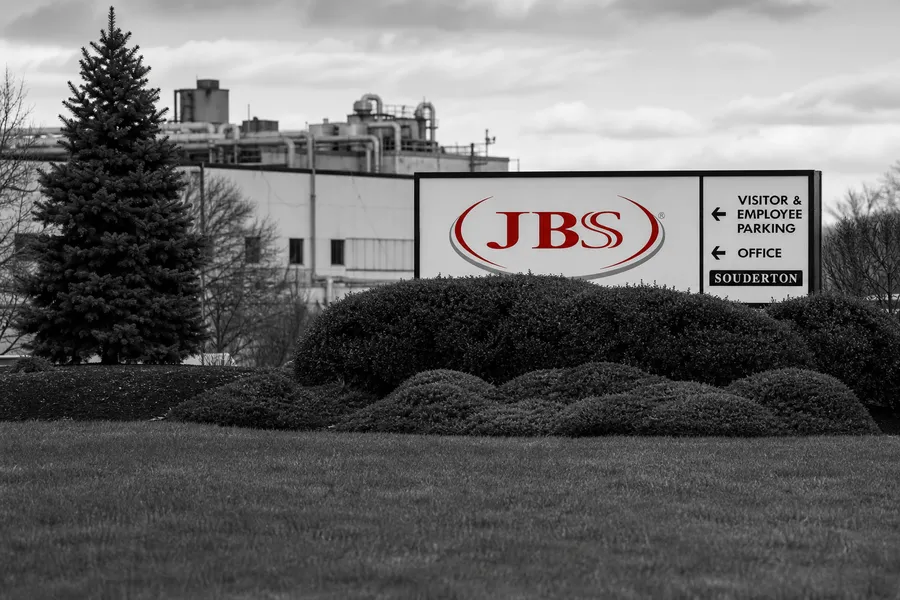
JBS, the world’s largest meatpacker, will permanently close its Swift Beef facility in Riverside, California on February 2, eliminating 374 jobs as a decade-low U.S. cattle herd squeezes processing margins across the sector.
The closure adds to a rapidly shrinking domestic beef-processing footprint, raising fresh questions about supply-chain resilience and long-term pricing power for protein-sector investors.
Key Takeaways
- JBS closes Riverside, California plant February 2, cutting 374 jobs.
- U.S. cattle herd at multi-decade low; beef prices at record highs.
- Tyson also shuttering Nebraska plant; Cargill says it will stay open.
Market Reaction & Context
The Riverside closure is the latest in a string of capacity reductions hitting U.S. beef processors. Rival Tyson Foods said in late November it would close its Lexington, Nebraska beef plant – capable of slaughtering up to 5,000 head per day, roughly 5% of total U.S. daily beef slaughter – and cut its Amarillo, Texas facility to a single shift starting January 20, affecting a combined 4,973 positions. 1
Cargill, by contrast, said it has “no intention to close any primary beef processing plants right now,” adding that it is actively investing in its eight North American cattle-slaughter facilities. 1 That divergence in strategy highlights how differently capitalised players are weathering the same supply shock.
The USDA in December trimmed its 2026 steer-price forecast to $235 per hundredweight – down 4.5% from its November estimate – while simultaneously raising its 2026 beef-import outlook 10% to 5.45 billion pounds as packers lean on foreign supply to fill the gap. 1 President Trump’s removal of tariffs on Brazilian beef is expected to provide further relief to ground-beef prices, the USDA said.
Detailed Analysis
The Riverside plant is a value-added, case-ready facility – it packages retail cuts but does not slaughter cattle. JBS said the shutdown was driven by a “strategic initiative to optimize its value-added and case-ready business and simplify operations across its network,” rather than directly by the cattle shortage. 2
Nevertheless, the broader sector context is stark: persistent drought reduced U.S. pasture quality, ranchers culled herds to their smallest size in decades, and a U.S. import halt on Mexican cattle – imposed to contain a flesh-eating screwworm parasite – tightened domestic supplies further. 1 Those dynamics have forced packers to pay sharply higher prices for every animal they buy.
Tyson’s beef segment posted an adjusted operating loss of $426 million for fiscal 2025, on top of a $291 million loss in fiscal 2024, with cattle costs rising nearly $2 billion year over year; the company is projecting a further adjusted loss of $400-$600 million for fiscal 2026. 2 JBS fared better in its most recent reporting period: JBS Beef North America posted record third-quarter revenue of $7.2 billion, which the company attributed to “resilient domestic demand.” 2
University of Nebraska-Lincoln researchers noted that when cattle supplies are tight, plants operating below full capacity must simultaneously absorb higher per-head costs, compressing margins to the point where permanent closure can become the rational choice to “utilize remaining capacity more efficiently.” 2
Management Outlook
“The company remains focused on delivering high-quality products and dependable service while strengthening its operational footprint to meet evolving market demands.”
– JBS spokesperson, as reported by Reuters 1
JBS said it will shift Riverside production to other facilities and that affected workers will be eligible for positions at other plants. The company has not signalled any additional closures. Displaced workers will receive notification under California’s WARN Act requirements, which triggered the state Employment Development Department filing that first made the closure public. 1
Conclusion
With two of the four major U.S. beef processors now cutting capacity, the structural question for macro and sector investors is whether the current contraction will accelerate herd rebuilding – and, if so, how long that cycle takes to restore processing-line economics. Analysts and USDA forecasters currently expect cattle prices to remain elevated through at least 2026, keeping margin pressure on any packer still running underutilised kill capacity.
Investors holding positions in protein-sector equities should monitor cattle placement data and monthly USDA supply-and-demand reports as leading indicators of when processing margins may begin to recover.
Not investment advice. For informational purposes only.
References
1Ryan Hanrahan (Dec. 15, 2025). “JBS Closing Beef Plant in California”. Farm Policy News. Retrieved June 12, 2026.
2Kristin Bakker (Dec. 18, 2025). “JBS to close California beef plant”. Beef Magazine. Retrieved June 12, 2026.
3Tom Polansek (Dec. 12, 2025). “JBS to close California beef plant over low U.S. cattle supply”. Reuters. Retrieved June 12, 2026.
4“JBS Souderton, Inc.”. USDA Food Safety and Inspection Service. Retrieved June 12, 2026.