
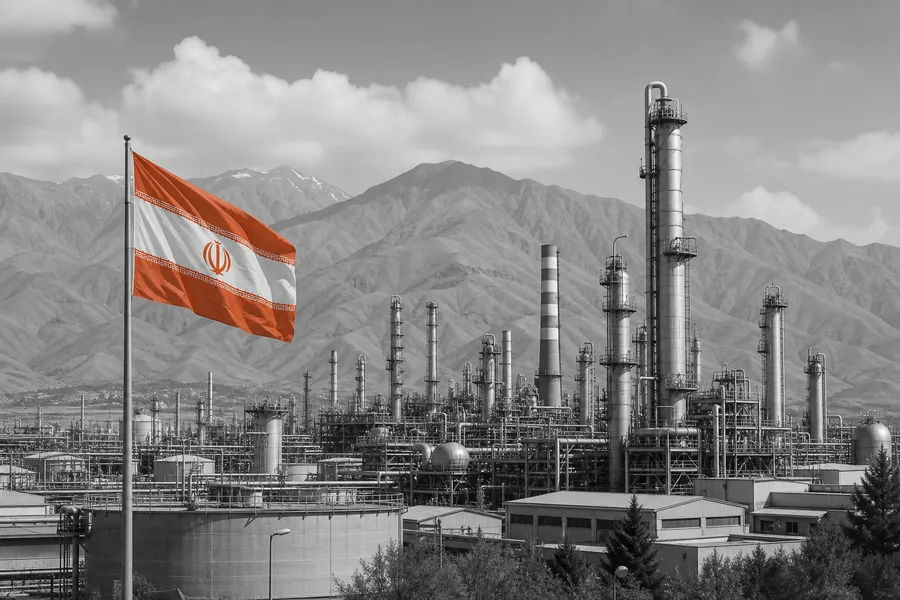
The U.S. revoked a 60-day Iranian oil sales authorization following tanker attacks in the Strait of Hormuz, abruptly reversing a sanctions waiver that had briefly allowed Tehran to sell crude on global markets for the first time in years.
For macro investors and energy-sector portfolios, the reversal reintroduces the supply-disruption premium that had begun to unwind after Washington and Tehran signed a memorandum of understanding in mid-June 2026.
Key Takeaways
- 60-day Iranian oil waiver revoked after fresh tanker attacks
- Treasury’s OFAC General License X had authorized crude sales through Aug. 21
- Hormuz transit and IAEA inspection commitments now in doubt
The Revocation and Its Immediate Market Signal
The Treasury Department’s Office of Foreign Assets Control had issued General License X on June 22, 2026, permitting the production, delivery and sale of Iranian crude oil, petroleum and petrochemical products through August 21, 2026 1. The license also covered associated banking, insurance and shipping transactions, with carve-outs for Cuba, North Korea and Russian-occupied Ukrainian territories.
Oil prices had already swung sharply during the preceding weeks: Brent crude surged when Iran began blockading the Strait of Hormuz earlier in the conflict, then retreated to multi-month lows after the interim ceasefire deal 2. The revocation of the license signals that the supply-easing thesis that drove that price decline is now materially at risk, a shift with direct read-through for integrated energy names, tanker operators and refining margins exposed to Middle East crude grades.
The earlier diplomatic framework had also carried significant geopolitical weight – and energy market consequences – as explored in our earlier coverage of how Hormuz ceasefire talks were already threatening oil and shipping stock stability.
What the Original License Established
Treasury Secretary Scott Bessent said the temporary authorization was tied directly to Iranian commitments secured during negotiations in Switzerland 1. “In line with the ongoing productive talks in Switzerland, Iran has committed to free and open transit in the Strait of Hormuz and to permit International Atomic Energy Agency (IAEA) inspectors into their country,” Bessent said on X.
The memorandum of understanding, signed the previous week, also allowed payments to Iran in U.S. dollar-denominated funds – a significant concession given decades of dollar-clearing restrictions. Independent Chinese refiners had been the primary buyers of sanctioned Iranian barrels, purchasing at steep discounts; the general license would have opened legal pathways for a much broader buyer base including Japan, South Korea, India and European refiners that exited Iranian crude after 2018 sanctions were reimposed 1.
Strategic Concession Under Scrutiny
Analysts had flagged the waiver as an unusually large concession even before the tanker attacks triggered its reversal. The Economist characterized the move as “a huge concession by America,” arguing that the potential revenue benefit to Tehran was substantial while Iran’s nuclear and regional commitments remained limited in scope 3.
The license’s revocation, while removing that revenue windfall, also removes the carrot that Washington was using to anchor Iran’s IAEA access pledges and Hormuz transit guarantees – the two commitments most directly tied to energy market stability.
Sector and Portfolio Implications
The abrupt policy reversal underscores the binary, event-driven nature of Iran-linked energy trades. Positions sized around a durable sanctions-easing narrative – particularly in tanker equities and Middle East-exposed refining stocks – face renewed headline risk.
Mediators said in late June that Washington and Tehran had made “encouraging progress” at the first round of talks aimed at a final peace deal, but those talks were predicated on the ceasefire framework that the tanker attacks have now placed under renewed pressure 1. The 60-day window that ran to August 21 provided a hard deadline for either a durable agreement or a full snapback to the pre-MOU sanctions posture.
Outlook
With the oil sales authorization pulled, the market focus shifts to whether back-channel negotiations can resume rapidly enough to prevent a full Hormuz re-escalation. Any resumption of Iranian port blockades or retaliatory tanker seizures would be expected to add a significant risk premium back into Brent, reversing the post-ceasefire price compression.
For sector-focused investors, the episode illustrates how quickly Iran-linked policy can swing between easing and tightening – making durable positioning in either direction difficult without clearer signals from the next round of Swiss-brokered talks.
Not investment advice. For informational purposes only.
References
1Psaledakis, Daphne; Jackson, Katharine; Heavey, Susan (June 22, 2026). “US authorizes Iranian oil sales amid talks on final peace deal”. Reuters. Retrieved July 7, 2026.
2(June 23, 2026). “U.S. temporarily lifts oil sanctions on Iran for first time in years”. ABC World News Tonight with David Muir. Retrieved July 7, 2026.
3(June 23, 2026). “Waiving sanctions on Iranian oil is a huge concession by America”. The Economist. Retrieved July 7, 2026.
4(June 22, 2026). “NEWS: The Trump administration has issued a 60-day waiver suspending U.S. sanctions on Iranian crude oil”. MeidasTouch via Facebook. Retrieved July 7, 2026.