
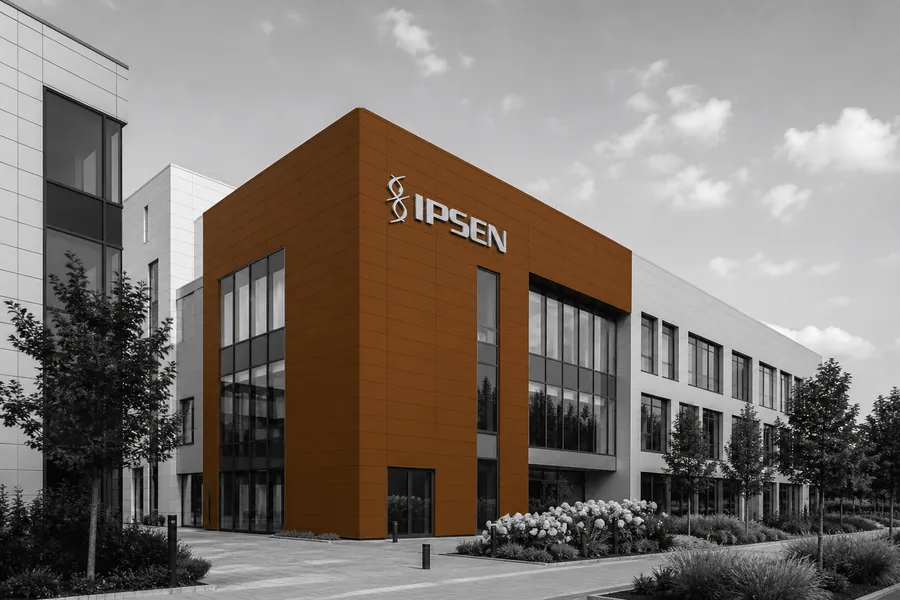
Ipsen (Euronext: IPN; ADR: IPSEY) agreed Wednesday to acquire ImCheck Therapeutics for up to €1 billion ($1.59 billion), adding a mid-stage leukemia immunotherapy to its oncology pipeline in a deal that underscores accelerating consolidation across European biopharma.
For investors tracking Ipsen’s capital deployment, the acquisition marks at least the fourth significant deal the Paris-based drugmaker has executed since 2024, signaling a strategy of filling pipeline gaps through targeted bolt-on acquisitions rather than internal discovery alone.
Key Takeaways
- Ipsen pays €350 million upfront; milestones could push total to €1 billion.
- Lead asset ICT01 targets AML patients ineligible for intensive chemotherapy.
- Phase IIb/III trial expected to launch in 2026 pending deal close.
Deal Structure & Market Context
Under the definitive share purchase agreement, ImCheck shareholders receive €350 million ($406 million) at closing on a cash-free, debt-free basis, with deferred payments tied to specified regulatory approvals and sales-based milestones bringing the potential total to €1 billion 1. The transaction is expected to close by the end of Q1 2026, subject to regulatory clearances in France and the United States.
Ipsen’s deal pace rivals that of larger European peers: since 2024 the company has committed up to $1 billion in an antibody-drug conjugate partnership with Foreseen Biotechnology, $350 million for ex-U.S. rights to Day One Biopharmaceuticals’ pediatric glioma drug, and a potential $1.8 billion collaboration with Skyhawk Therapeutics on RNA-targeting neuro assets 2. The ImCheck transaction adds acute myeloid leukemia (AML) exposure to that growing oncology footprint.
The Science Behind the Deal
ImCheck’s lead program, ICT01, is a humanized monoclonal antibody targeting BTN3A – an immune-regulatory molecule expressed across multiple cancer types – that activates γ9δ2 T cells to recognize and destroy tumor cells 1. The mechanism is distinct from conventional checkpoint inhibitors, which has drawn investor attention as the oncology field searches for combination partners beyond PD-1/PD-L1 blockade.
Interim data from 45 patients in the Phase I/II EVICTION trial, presented at the American Society of Clinical Oncology in June 2025, showed ICT01 combined with venetoclax and azacitidine approximately doubled treatment response rates versus historical standard-of-care data across all molecular subtypes of newly diagnosed AML 2. ICT01 received Orphan Drug Designations from both the U.S. Food and Drug Administration and the European Medicines Agency in July 2025, a regulatory status that can accelerate review and provide market-exclusivity protections.
Target Patient Population & Unmet Need
AML is an aggressive blood cancer that disproportionately affects older adults, many of whom cannot tolerate the rigors of intensive chemotherapy and must rely on lower-intensity regimens that often deliver limited, short-lived benefit 1. ICT01’s early data specifically targets this “unfit” population – a commercially meaningful segment given aging demographics across developed markets.
ICT01 is also being evaluated in childhood AML and in Stage III/IV melanoma and solid tumors, providing optionality beyond the initial AML indication. ImCheck’s preclinical pipeline includes ICT41, a T-cell activator targeting bacterial and viral infections, adding a non-oncology dimension that could broaden the asset base Ipsen absorbs.
Management Outlook
“We feel confident that with the ICT01 promising data combined with Ipsen’s global development and commercialization expertise, we are well positioned to start a Phase IIb/III trial in 2026,” said David Loew, CEO of Ipsen.
ImCheck CEO Pierre d’Epenoux said the transaction “recognizes groundbreaking science originating from French academia,” citing the pioneering research of Professor Daniel Olive at Institut Paoli Calmettes on γ9δ2 T cells and butyrophilins 1. Ipsen plans to initiate the registrational Phase IIb/III study once the deal closes, with 2026 as the target start date.
Risks & Investor Considerations
ICT01 remains in Phase I/II testing, and interim data from 45 patients in a single-arm trial carries inherent limitations – notably the absence of a randomized control arm and a small sample size. Regulatory approval is not guaranteed, and the milestone-heavy payment structure means the full €1 billion is contingent on commercial and regulatory outcomes that could take years to materialize.
Allen & Overy Shearman advised Ipsen on legal matters; Centerview Partners served as exclusive financial advisor to ImCheck, with Goodwin and Dentons as legal counsel 1. The deal’s financial impact on Ipsen’s near-term earnings and balance sheet was not detailed in the company’s announcement.
Conclusion
The ImCheck acquisition reinforces Ipsen’s posture as an active consolidator in European oncology, paying a structurally low upfront price relative to total potential value – a deal template that mirrors broader biotech M&A trends where acquirers shift risk to milestone payments. How quickly ICT01 advances through registrational studies will determine whether the full €1 billion price tag is ever reached.
Not investment advice. For informational purposes only.
References
1(Oct 22, 2025). “Ipsen to acquire ImCheck Therapeutics, expanding its leadership in oncology, strengthening its pipeline”. Ipsen. Retrieved June 29, 2026.
2Samorodnitsky, Dan (Oct 22, 2025). “Ipsen Puts Up $1.6B To Absorb ImCheck for Mid-Stage Leukemia Antibody”. BioSpace. Retrieved June 29, 2026.
3(Jul 25, 2024). “Ipsen builds again, licensing Day One glioma drug”. Pharmaphorum. Retrieved June 29, 2026.