
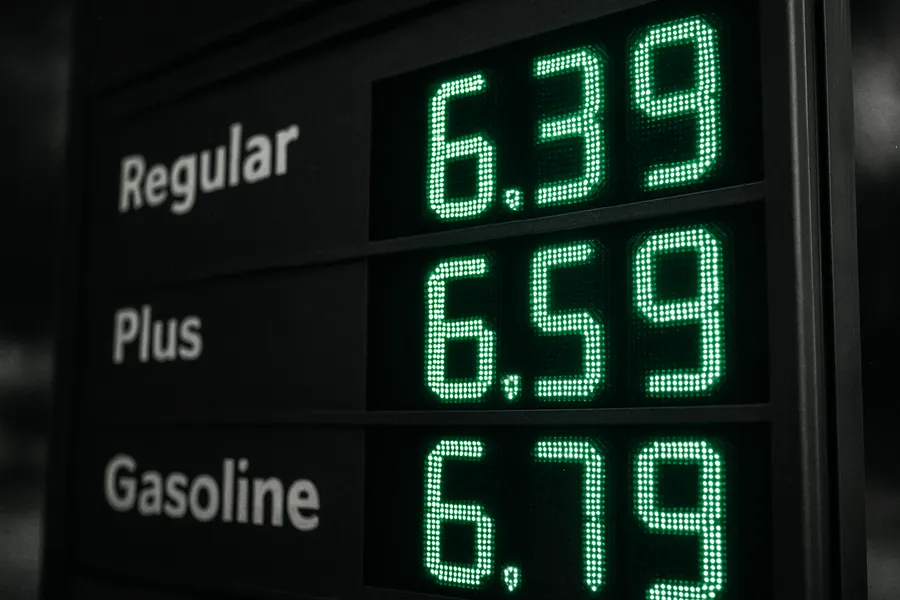
April’s consumer price increases reached 3.8% on an annual basis, exceeding analyst projections and representing the steepest inflation rate recorded since May 2023 1. This uptick demonstrates continuing inflationary momentum that may shape Federal Reserve monetary decisions and impact corporate performance across various industries.
Key Takeaways
- April inflation hit 3.8%, above 3.4% forecast
- Energy and shelter costs drove monthly increases
- Markets pushed rate cut expectations to September
Market Reaction & Context
The Consumer Price Index climbed more rapidly than the anticipated 3.4% annual rise, with month-over-month prices advancing 0.4% 1. Equity futures retreated after the data release as Treasury yields jumped, demonstrating investor unease about extended periods of higher borrowing costs.
Core CPI, which strips out volatile food and energy items, similarly surpassed projections at 3.8% year-over-year compared to the anticipated 3.7% 1. This represented the third straight month of inflation readings that outpaced expectations, undermining the Federal Reserve’s assessment of diminishing price pressures.
Detailed Analysis
Energy expenses advanced 1.1% for the month following February’s 2.3% gain, while housing costs expanded 0.4% monthly and 5.7% annually 1. These sectors contributed more than 70% of the monthly inflation advancement, underscoring continued pressure areas within the economy.
Food prices offered some moderation, dropping 0.2% monthly for the first occurrence in twelve months 2. Nevertheless, motor vehicle insurance maintained its troubling pattern, jumping 1.8% for the month and 22.6% annually, while repair expenses stayed high at 7.6% year-over-year.
Fed Policy Implications
Federal funds futures markets swiftly adjusted expectations after the data release, moving the first projected rate reduction from June to September 1. The continuing inflation figures reinforce the Fed’s measured approach to policy modifications.
“There’s not much you can point to that this is going to result in a shift away from the hawkish bent from Fed officials,” said Liz Ann Sonders, chief investment strategist at Charles Schwab 1. “June to me is definitively off the table.”
Economic Outlook
The inflation pickup occurs alongside wider economic uncertainty, with additional data revealing stagnant retail sales in April 2. This pairing indicates consumers might be approaching spending constraints while price pressures continue across essential categories.
Real average hourly earnings held steady monthly and rose merely 0.6% during the past year, showing that salary improvements continue falling behind inflation 1. This relationship could limit consumer purchasing capacity and economic expansion in future quarters.
Conclusion
April’s inflation jump validates the Fed’s measured stance on rate reductions while emphasizing persistent challenges for consumers and enterprises. The widespread price gains across housing, energy, and services indicate inflationary forces remain more embedded than earlier expected.
Investors should track forthcoming economic indicators for evidence of whether this reflects a temporary spike or a more troubling reversal in the disinflationary trajectory.
Not investment advice. For informational purposes only.
References
1Jeff Cox (April 10, 2024). “Consumer prices rose 3.5% from a year ago in March, more than expected”. CNBC. Retrieved May 12, 2026.
2Alicia Wallace (May 15, 2024). “US inflation rises 3.4% in April from the past year”. ABC12. Retrieved May 12, 2026.
3“Consumer prices up 2.3 percent from April 2024 to April 2025” (May 19, 2025). U.S. Bureau of Labor Statistics. Retrieved May 12, 2026.