
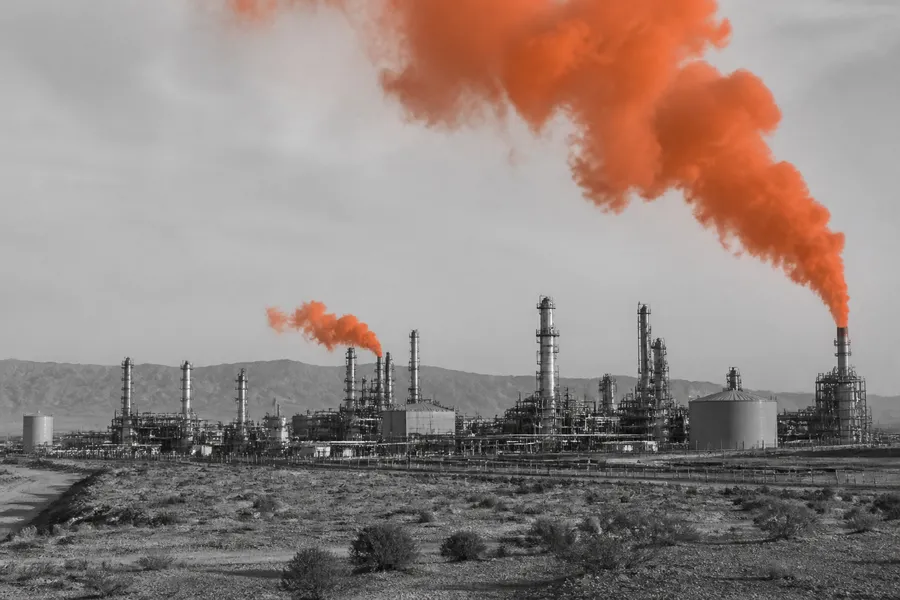
Yemen’s Houthi forces launched ballistic missiles and drones at Saudi Aramco sites near Riyadh and Khurais on Monday, sending oil prices higher and reigniting fears over Gulf supply security.
The attacks targeting the world’s largest crude exporter put a fresh geopolitical risk premium into global energy markets, with implications for energy sector earnings and downstream fuel costs that investors in oil majors, refiners, and energy ETFs cannot ignore.
Key Takeaways
- Houthis struck Aramco facilities in Riyadh and Khurais, Saudi Arabia.
- Oil prices climbed on renewed Gulf supply-disruption fears.
- Aramco production continuity remains the critical market unknown.
Market Reaction & Context
Oil prices climbed in Monday’s Asian session following news of the strikes, extending a pattern of geopolitical risk-driven rallies that has repeatedly lifted Brent crude above its rolling 30-day average whenever Gulf infrastructure comes under threat 1. The Khurais oil field, one of Saudi Arabia’s most productive onshore assets with capacity of roughly 1.5 million barrels per day, sits at the centre of investor concern over output continuity.
The move puts crude back in focus after Houthi operations have repeatedly stoked oil supply concerns across the region, adding incremental risk premium each time Riyadh’s export infrastructure is directly targeted. Broader energy benchmarks, including Brent and West Texas Intermediate, tracked higher in tandem, outperforming equity indices in early trading.
Detailed Analysis
The Houthi movement, backed by Iran, said it deployed both ballistic missiles and drone platforms in what it characterised as a coordinated strike package against Saudi Aramco (2222.SE) facilities 1. The dual-vector attack mirrors the September 2019 strike on Abqaiq and Khurais that temporarily knocked out approximately five percent of global oil supply – a precedent that energy traders have not forgotten.
Khurais is a strategically significant target: it was among the facilities struck in 2019, and any confirmed production disruption there would materially tighten near-term supply balances. OPEC+ spare capacity – already a contested variable amid ongoing Iran-related tensions – would face immediate scrutiny as a potential buffer if Aramco output falters.
Saudi Arabia had not independently confirmed the extent of damage or operational impact at the time of publication, leaving the market to price uncertainty rather than a confirmed output loss. That ambiguity itself is a premium-sustaining factor, as traders historically bid crude higher until supply continuity is verified.
Geopolitical Backdrop
The strikes are the latest escalation in Yemen’s prolonged civil conflict, in which Houthi forces have increasingly employed long-range weapons to pressure Riyadh. Iran-linked supply-side risks have been a persistent upside driver for crude, complicating any straightforward read on OPEC+ production management.
Analysts have noted that each successful Houthi strike on Saudi energy infrastructure raises the structural floor for the geopolitical risk premium embedded in oil prices, regardless of whether physical supply is ultimately disrupted. The Riyadh targeting is particularly notable, as attacks on the capital itself carry heightened political symbolism beyond the economic impact.
Outlook
Reuters cited rising market concern over production at “the top exporter in the region,” with Aramco’s response and any Saudi government confirmation of damage likely to be the next significant price catalyst 1. Iran’s broader posture in the region continues to shape the risk premium across energy futures, and further Houthi escalation cannot be ruled out absent a diplomatic shift.
For sector investors, the key variable is whether Aramco confirms any production curtailment – a development that would sharpen earnings estimates for global oil majors, lift refining margins for those with diversified feedstock access, and apply upward pressure on energy input costs across industrials and transportation.
Conclusion
Monday’s Houthi missile-and-drone salvo against Saudi Aramco sites reintroduced acute supply-disruption risk to energy markets at a moment when geopolitical tensions across the Middle East were already elevated. Until Riyadh provides a definitive damage assessment, crude prices are likely to hold a risk premium, with traders watching Khurais capacity utilisation as the most consequential near-term data point.
Not investment advice. For informational purposes only.
References
1(2026, October 4). “Oil climbs after Yemeni Houthis attack Saudi Aramco sites”. Reuters. Retrieved October 4, 2026.