
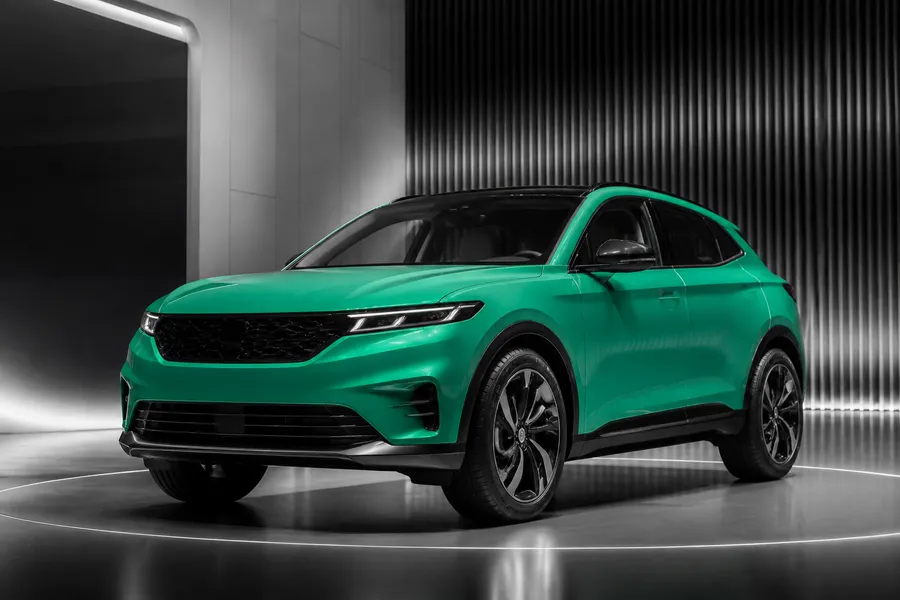
Honda Motor (7267.T) is finalising plans to build a dedicated hybrid-vehicle plant in Ohio at a cost of up to ¥400 billion ($2.53 billion), a move that underscores the automaker’s pivot away from an all-electric timeline as consumer EV adoption lags industry forecasts.1
The investment, if confirmed, would represent one of the largest single-factory commitments Honda has made in North America in years, with direct implications for revenue visibility and capital allocation through the end of the decade.
Key Takeaways
- Honda to spend up to $2.53 billion on a new Ohio hybrid plant.
- Production targeted to begin in 2030, per Nikkei reporting.
- Move signals a deliberate hybrid-first shift amid slowing EV demand.
Competitive Context & Market Positioning
Honda’s Ohio commitment lands as hybrid sales across the U.S. market continue to outpace battery-electric vehicle growth in unit terms. Toyota, the segment’s dominant incumbent, reported that hybrid models accounted for roughly 30% of its U.S. sales mix in the most recent fiscal year, a benchmark Honda is now explicitly targeting with domestic production capacity.
The Nikkei report, published Thursday, said Honda is in the “final stages of preparations,” suggesting a formal announcement is imminent. Ohio already hosts several Honda facilities, making the state a logical extension of the automaker’s existing U.S. manufacturing footprint. The broader U.S. manufacturing investment wave in the region – which has attracted semiconductor and EV supply-chain players alike – provides Honda with a well-developed industrial ecosystem; Ohio has separately emerged as a focal point for large-scale factory investments across multiple technology sectors.
Detailed Analysis
The planned outlay of ¥300 billion to ¥400 billion ($1.90 billion to $2.53 billion, at the prevailing rate of ¥157.88 per dollar) places the project squarely among Honda’s largest single-asset capital commitments in North America.1 For context, Ford and General Motors have each spent north of $3 billion on individual EV or battery-plant projects in recent years, suggesting Honda’s ticket size, while substantial, is calibrated rather than aggressive.
The hybrid focus is strategically significant. Honda had previously outlined an ambition to sell only battery-electric and fuel-cell vehicles globally by 2040. A dedicated hybrid plant coming online in 2030 implies the company is extending the commercial life of electrified-but-not-fully-electric powertrains well into the next decade, responding to a demand environment where consumers have shown sustained appetite for hybrids over pure EVs.
From a supply-chain standpoint, Ohio-based hybrid production reduces Honda’s exposure to yen-dollar currency risk on U.S.-market vehicles and partially insulates the company from future tariff fluctuations on Japanese imports – a consideration that has grown in relevance given ongoing U.S. trade-policy uncertainty.
Investor Outlook
No official quotation from Honda management was available at the time of writing, as the company had not formally confirmed the Nikkei report. Honda shares trade in Tokyo under the ticker 7267.T; the company’s U.S.-listed American depositary receipts provide retail investors a direct proxy for the stock’s reaction when markets open.
The 2030 production start date means near-term earnings impact is limited, but capital expenditure guidance for fiscal years 2027 through 2029 could face upward revision once the project is formally sanctioned. Analysts tracking Honda will likely watch for any commentary on how this Ohio commitment interacts with the automaker’s previously flagged EV joint-venture plans with General Motors, which were scaled back in late 2023.
Conclusion
A $2.5 billion hybrid factory in Ohio positions Honda as a pragmatic player in an industry still navigating the uneven pace of electrification. The bet is not on battery-electric dominance but on the durability of consumer demand for fuel-efficient transition technology – a wager that, if the current sales trajectory holds, could prove well-timed as rivals absorb heavy losses on pure-EV programmes.1
Not investment advice. For informational purposes only.
References
1Sugiyama, Satoshi (2026-09-24). “Honda plans to invest $2.5 bln to build hybrid vehicle plant in Ohio, Nikkei says”. Reuters. Retrieved 2026-09-24.