
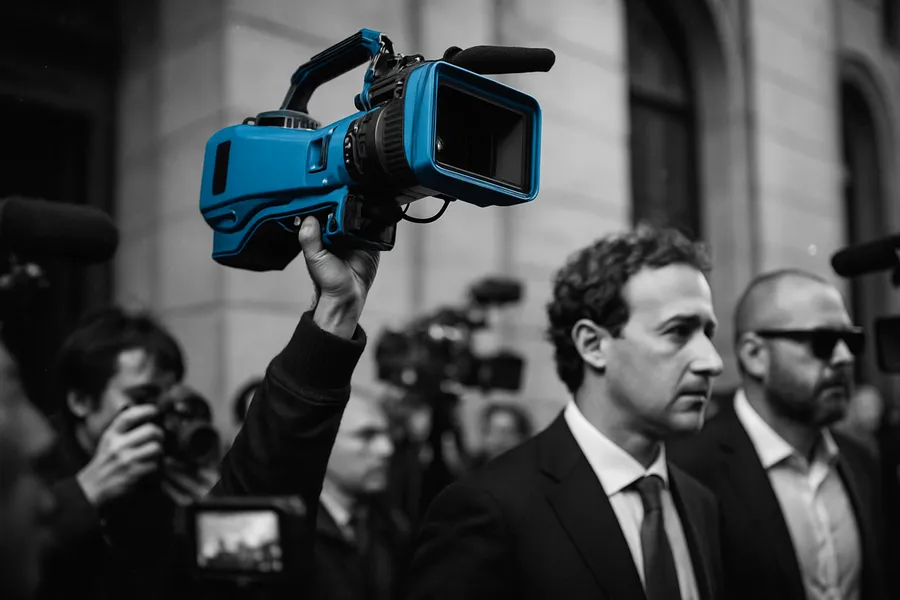
Meta Platforms (META.O) and Alphabet (GOOGL.O) are confronting escalating legal pressures as recent court decisions circumvent established Section 230 safeguards, suggesting possible regulatory transformations that may affect their operational frameworks. These rulings mark the initial successful challenges against tech platforms’ fundamental design elements instead of user-created content, potentially unleashing a wave of thousands of comparable legal actions.
Key Takeaways
- Juries found Meta and Google liable for addictive platform design
- Section 230 protections weakening through targeted legal strategies
- Thousands of pending lawsuits could follow similar approaches
Recent Court Defeats Signal Broader Shift
In Los Angeles, a jury delivered $6 million in damages against Meta and Google following determinations that their platforms were intentionally engineered to create addiction among children 1. Additionally, a New Mexico court mandated Meta pay $375 million for inadequate protection of young users against predatory behavior 2.
While these financial sanctions appear modest relative to the companies’ trillion-dollar market capitalizations, they create legal precedent for challenging platform architecture instead of content. This methodology sidesteps Section 230 of the Communications Decency Act, which has shielded technology companies from responsibility regarding user-generated posts since 1996 3.
Legal Strategy Targets Platform Architecture
Attorneys for plaintiffs concentrated on elements such as autoplay video features, algorithmic recommendation systems, and notification prompts that they contended transformed platforms into “digital casinos” engineered to captivate young audiences 4. This methodology diverges from conventional content-focused litigation that generally fails under Section 230 immunity.
“The plaintiffs’ bar is winning the war against section 230 through systematic, relentless litigation that is causing there to be divots and chinks in its protection,” said Eric Goldman, a law professor at Santa Clara University School of Law 5.
Broader Implications for Tech Industry
Over 2,400 lawsuits have been consolidated in California federal court, while thousands additional cases in state jurisdictions target Meta, Google, Snapchat parent Snap Inc., and TikTok 6. These legal challenges claim platform architectures contribute to youth mental health deterioration and educational interference.
Legal analysts indicate appellate courts may require clarification of Section 230’s boundaries, potentially leading to Supreme Court examination. Two conservative justices have previously characterized the legislation as a “get-out-of-jail free card” for social media companies 7.
Industry Response and Future Outlook
Meta and Google both announced plans to contest the verdicts. “Teen mental health is profoundly complex and cannot be linked to a single app,” a Meta spokesperson said 8. Google characterized its YouTube platform as “a responsibly built streaming platform, not a social media site” 9.
These results may compel platform alterations that decrease user engagement duration, potentially affecting advertising revenues. Legislative action regarding children’s online safety measures may gain momentum following these decisions, with cross-party endorsement for the Kids Online Safety Act 10.
Market Context
Meta stock prices dropped after the verdict announcements, although the financial consequences remain modest compared to corporate valuations. Industry analysts perceive these cases as creating concerning precedent while tech companies transition toward AI-powered services that may encounter similar design-focused legal challenges.
This legal pressure emerges as social media corporations already encounter heightened examination regarding content oversight, data protection, and competition issues across various regulatory environments.
Not investment advice. For informational purposes only.
References
1Jennifer Elias, Jonathan Vanian (April 3, 2026). “Meta, Google under attack as court cases bypass 30-year-old legal shield”. CNBC. Retrieved April 3, 2026.
2Diana Novak Jones (March 26, 2026). “US jury verdicts against Meta, Google tee up fight over tech liability shield”. Reuters. Retrieved April 3, 2026.
3Bloomberg News (March 26, 2026). “Meta, Google risk Big Tobacco-like fallout after addiction trial”. Financial Post. Retrieved April 3, 2026.
4Bobby Allyn (March 25, 2026). “Jury finds Meta and Google negligent in social media harms trial”. NPR. Retrieved April 3, 2026.
5Jennifer Elias, Jonathan Vanian (April 3, 2026). “Meta, Google under attack as court cases bypass 30-year-old legal shield”. CNBC. Retrieved April 3, 2026.
6Diana Novak Jones (March 26, 2026). “US jury verdicts against Meta, Google tee up fight over tech liability shield”. Reuters. Retrieved April 3, 2026.
7Diana Novak Jones (March 26, 2026). “US jury verdicts against Meta, Google tee up fight over tech liability shield”. Reuters. Retrieved April 3, 2026.
8Bloomberg News (March 26, 2026). “Meta, Google risk Big Tobacco-like fallout after addiction trial”. Financial Post. Retrieved April 3, 2026.
9Bobby Allyn (March 25, 2026). “Jury finds Meta and Google negligent in social media harms trial”. NPR. Retrieved April 3, 2026.
10Bloomberg News (March 26, 2026). “Meta, Google risk Big Tobacco-like fallout after addiction trial”. Financial Post. Retrieved April 3, 2026.