
Iran closed the Strait of Hormuz on Monday, threatening 20% of global oil flows and sending Brent crude up 2.6% to $80 per barrel amid fears of supply disruptions.
The closure could push oil prices above $100 per barrel if sustained, analysts warned, creating particular risks for Asian economies that depend heavily on energy imports through the strategic waterway 1.
Key Takeaways
- Iran blocks Strait carrying 31% of seaborne crude flows
- Asian countries face steepest energy supply disruption risks
- Oil prices could exceed $100 amid prolonged closure
Market Reaction & Regional Impact
Iran’s Revolutionary Guards announced the closure Monday, warning any vessel attempting transit would be targeted. Major shipping companies including Maersk and Hapag-Lloyd suspended operations through the narrow 21-mile waterway connecting the Persian Gulf to global markets 1.
Asian economies face the most severe impact, with China, India, Japan and South Korea accounting for 75% of oil flows and 59% of liquefied natural gas shipments through the strait. Japan emerges as most vulnerable, sourcing 87% of its energy from fossil fuel imports compared to China’s 20% 2.
Country-Specific Vulnerabilities
India confronts dual exposure through both oil and LNG dependencies. Around 60% of its oil imports originate from the Middle East, while more than half its LNG imports are Gulf-linked, creating what analysts describe as a “dual physical and financial shock” 1.
Pakistan and Bangladesh face immediate strain with 99% and 72% of their LNG imports respectively coming from Qatar and the UAE. Bangladesh already runs a gas deficit exceeding 1,300 million cubic feet per day, leaving minimal buffer for additional supply disruptions 2.
Price Projections and Economic Impact
“If the reduction in tanker traffic continues for a week or so, it will be historic. Beyond that, it would be epochal for the oil market with prices rising to ration scarce supply,” said S&P Global’s Jim Burkhard 1.
Analysts project varied price scenarios ranging from $80 to $300 per barrel depending on disruption duration. JPMorgan estimates prices could reach $120-130 per barrel in a worst-case scenario, matching 2007-2008 oil shock levels 3.
Alternative Routes Limited
Limited pipeline alternatives exist through Saudi Arabia’s East-West Pipeline and the UAE’s Abu Dhabi Crude Oil Pipeline. However, these can accommodate only a fraction of normal Strait volumes, leaving most shipments with no viable alternative routes 4.
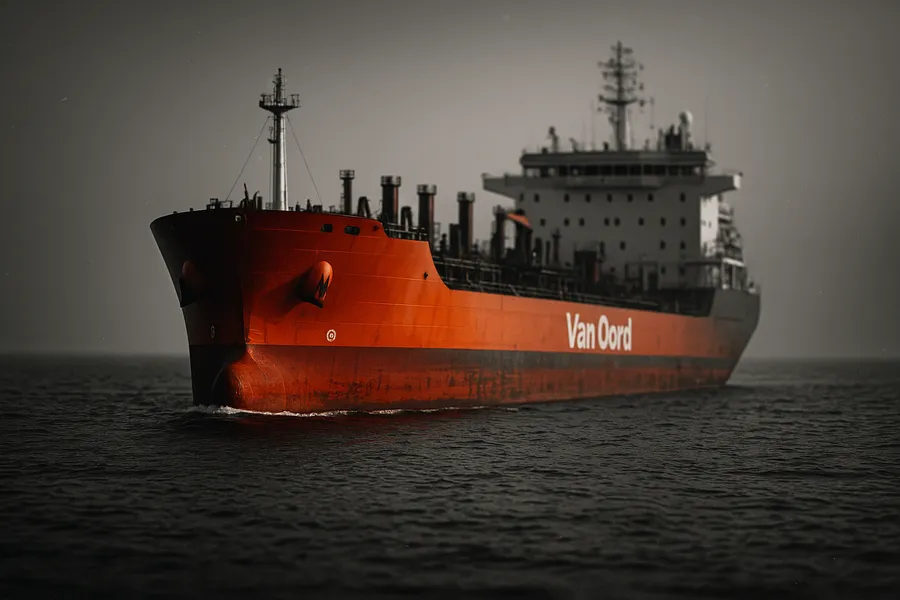
Roughly 70 laden crude tankers currently remain trapped inside the Gulf – double normal levels – while 60 more wait outside the strait. LNG inventories provide temporary cushioning, with China holding 7.6 million tons and Japan maintaining 4.4 million tons in reserves 1.
Long-term Energy Security
The crisis highlights vulnerabilities in global energy supply chains concentrated through single chokepoints. European countries reduced gas imports 18% between 2022-2024 following Russia’s Ukraine invasion, demonstrating potential for rapid demand restructuring through renewable energy deployment 3.
For import-dependent Asian economies, the disruption reinforces strategic imperatives for energy diversification and domestic renewable capacity expansion to reduce exposure to geopolitical supply shocks.
Not investment advice. For informational purposes only.
References
1Lee Ying Shan (March 3, 2026). “The Strait of Hormuz is facing a blockade. These countries will be most impacted”. CNBC. Retrieved March 3, 2026.
2CNBCTV18.com (March 3, 2026). “These countries are likely to be impacted the most by Strait of Hormuz blockade”. CNBC TV18. Retrieved March 3, 2026.
3Nick Hedley (February 26, 2026). “Asian countries most at risk from oil and gas supply disruptions in Strait of Hormuz”. Zero Carbon Analytics. Retrieved March 3, 2026.
4Megan Cerullo (March 2, 2026). “Strait of Hormuz ship traffic slows to a crawl. Here’s what to know about the key oil waterway”. CBS News. Retrieved March 3, 2026.